(Doctrine of Eternal Recurrence — INTRODUCTION, aph. 2)
Beyond its rational incomprehensibility, disbelief in the Eternal Return rests upon yet another unease — the existential unbearability of one’s own life, consciously imprisoned within a hopeless circle: a life that meaninglessly “repeats itself” ad infinitum, without any hope of ever being lived even slightly differently. Nietzsche clearly had this unease of the Eternal Return in mind when he decided to publish the doctrine for the first time — in those somber passages of the otherwise The Gay Science:
“What, if some day or night a demon were to steal after you into your loneliest loneliness and say to you: ‘This life as you now live it and have lived it, you will have to live once more and innumerable times more; and there will be nothing new in it, but every pain and every joy and every thought and sigh and everything unutterably small or great in your life will have to return to you, all in the same succession and sequence—even this spider and this moonlight between the trees, and even this moment and I myself. The eternal hourglass of existence is turned upside down again and again—and you with it, speck of dust!’ Would you not throw yourself down and gnash your teeth and curse the demon who spoke thus?” (The Gay Science, §341, trans. Walter Kaufmann, New York: Vintage, 1974)
Nietzsche affectionately referred to the thought of Eternal Return as seine schwerste Gedanke (“his heaviest thought”) (Nachlass, summer 1881, KSA 9, 11[141]), and also as “the greatest weight” (das grösste Schwergewicht), a formulation that appears later in the same cited aphorism. Thus, at the very outset of this writing, we must conclude that the doctrine of the Eternal Return bears upon its back two truly hard-to-digest burdens — the rational incomprehensibility and the existential unbearability of the teaching — for which reason it will, willingly or unwillingly, always struggle to find its adherents.
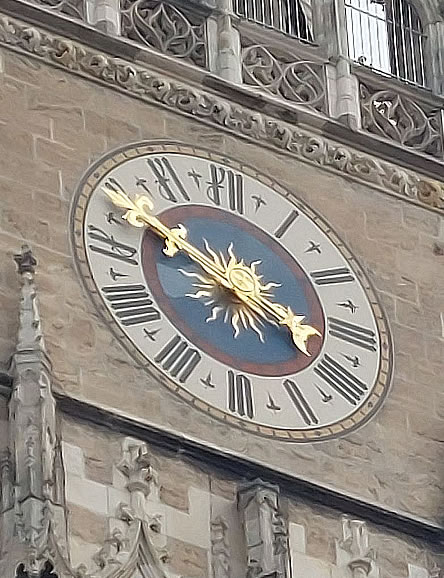
 The Doctrine of Eternal Recurrence